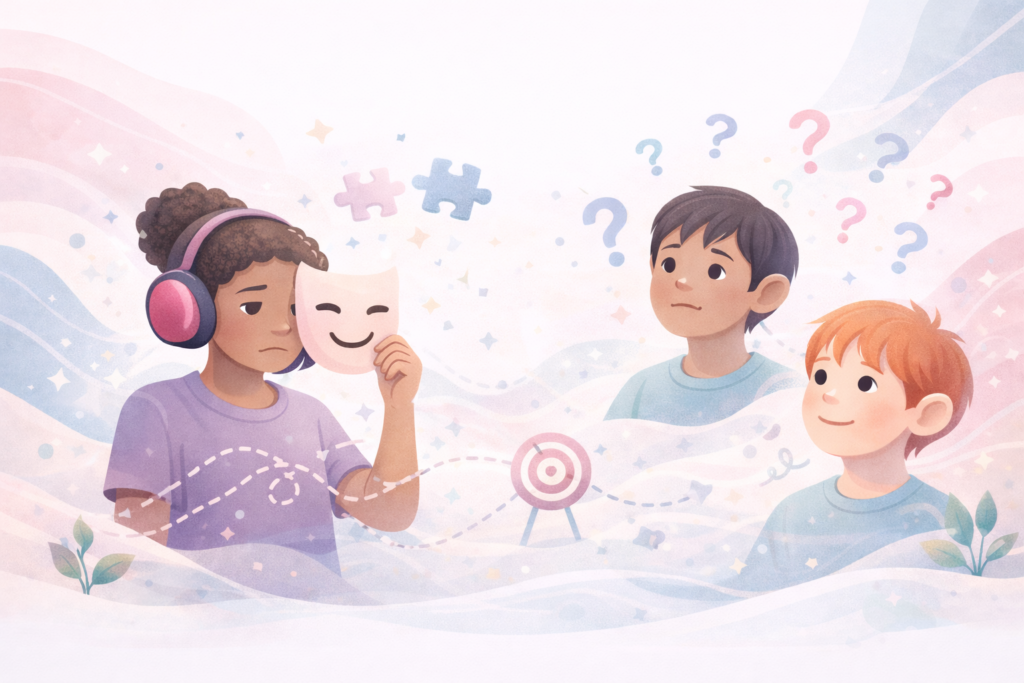
Girls, boys, masking & late identification
Camouflaging, burnout, internalising traits, and why some profiles are missed for years.
At a glance
- Girls may camouflage (mask) to fit in, which can delay identification and increase burnout risk.
- Internalising (anxiety, perfectionism, social exhaustion) may be the first visible sign.
- Puberty can amplify sensory and emotional load.
If you only do one thing
- Track the cost of a “good day”: after‑school collapse, headaches, shutdowns, sleep issues — those are clues.
Masking (camouflaging) can hide support needs
Masking is using strategies to fit in: copying peers, forcing eye contact, rehearsing scripts, suppressing stims. It can help someone navigate a social world — but it has a cost.
Chronic masking can contribute to exhaustion, anxiety, and burnout.
Why girls are often identified later
Girls may have interests that look more “socially typical,” stronger imitation skills, and fewer overt behaviour issues in early school years. Distress may show up as perfectionism, stomach aches, school refusal, or friendship stress.
The clue is often the mismatch between the child’s outward competence and the private cost.
Puberty and developmental transitions
Hormonal and social changes can increase sensory load, sleep challenges, and emotional intensity. Support often needs to increase during transitions.
Validate the experience, reduce demand where possible, and build predictable supports.
Support that protects identity
Avoid forcing “normal.” Instead, build communication and regulation supports, teach self‑advocacy, and create environments where the child can unmask safely.
Look for affirming clinicians and schools that understand internalising presentations.