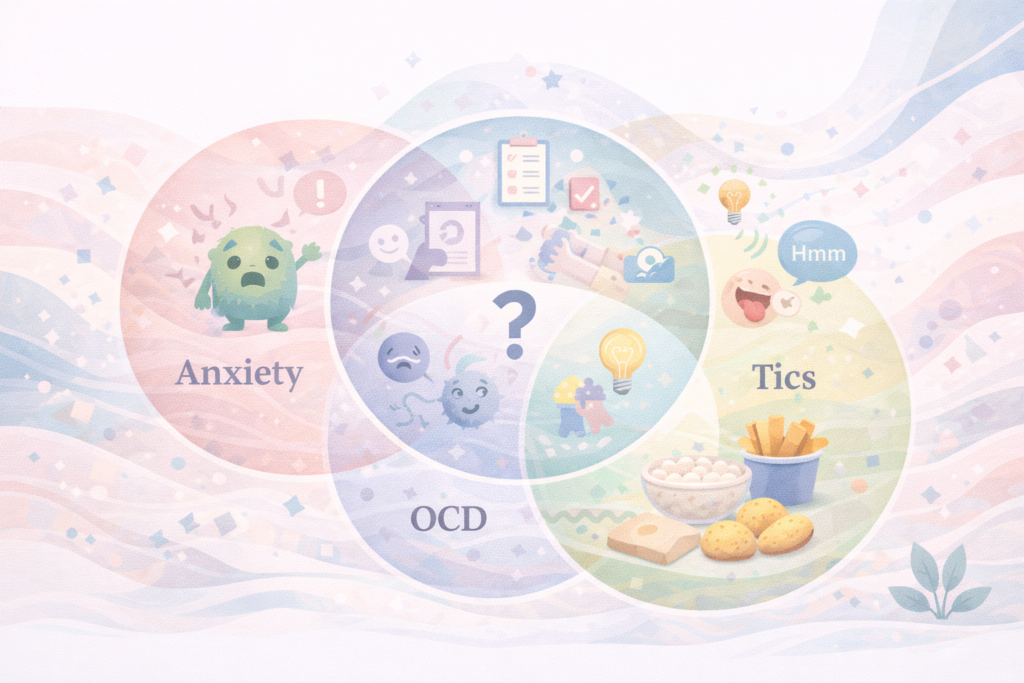
Anxiety, OCD traits & tics: overlap and differentiation
How anxiety can masquerade as “behaviour”, common overlaps, and what helps without escalating distress.
At a glance
- Anxiety often rides on sensory overload and uncertainty.
- OCD traits involve intrusive thoughts + compulsions; tics are involuntary movements/vocalisations.
- Treat the nervous system load, not just the thoughts.
If you only do one thing
- Reduce uncertainty: preview plans, visual schedules, and “if‑then” plans for hard moments.
Anxiety often rides on uncertainty + sensory load
Anxiety is common in neurodivergent kids. It can show up as avoidance, perfectionism, anger, stomach aches, or refusal.
Treat anxiety as a signal: something is too unpredictable, too demanding, or too uncomfortable.
OCD traits vs anxiety
OCD involves intrusive thoughts and compulsions (actions or mental rituals) used to reduce distress. Anxiety can include repetitive reassurance seeking, but OCD tends to have ritualised patterns.
If you suspect OCD, professional guidance is recommended.
Tics and Tourette
Tics are involuntary movements or sounds that can wax and wane. Stress and fatigue often increase tics.
Avoid punishing tics; focus on reducing stress load and supporting self‑confidence.
What helps without escalating
Reduce uncertainty: preview plans, use visual schedules, create “if‑then” plans. Teach body skills (breathing, grounding) when calm.
Avoid prolonged reassurance loops. Offer structure: “I hear you’re worried. Here’s our plan.”