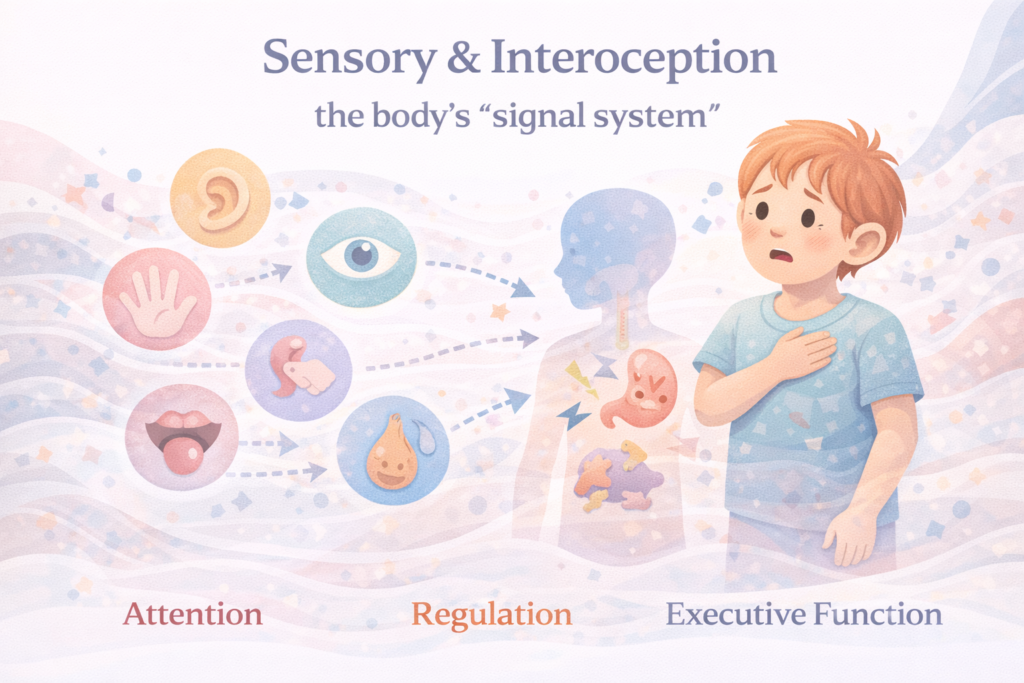
Sensory & interoception: the body’s “signal system”
Sensory profiles, overload, shutdowns, and how to build calmer environments.
At a glance
- Sensory processing affects attention, emotion and behaviour — it is not “extra sensitivity” alone.
- Interoception is the sense of internal body signals (hunger, pain, bladder, temperature).
- Overload builds; shutdown is a protective response.
If you only do one thing
- Create one reliable “downshift ritual”: dim light, pressure input, predictable words, and quiet time.
Sensory processing shapes behaviour
Sensory processing is the way the nervous system notices, filters, and responds to input. When input is too intense or unpredictable, the brain may shift into protection (fight/flight/freeze).
This can look like “behaviour,” but it is often physiology: overwhelm, pain, or threat response.
Interoception: inside‑the‑body signals
Interoception is the sense of internal signals: hunger, fullness, thirst, temperature, pain, bladder, fatigue. Many neurodivergent kids have muted or confusing interoception.
That can mean late hunger cues, sudden “hanger,” toileting surprises, or difficulty describing pain.
Overload, meltdown, shutdown
Overload builds. A child might cope until the last straw (noise, light, scratchy clothing, demands). Meltdowns and shutdowns are protective responses, not choices.
Support focuses on reducing load, adding predictability, and providing a reliable downshift routine.
Building a calmer environment
Start with one “safe base”: predictable lighting, fewer competing sounds, comfortable clothing options, and a small retreat space.
Then add tools: noise reduction, deep pressure (if preferred), movement, chewing, fidgets — but only if the child experiences them as soothing.
Link to feeding and sleep
Sensory discomfort can drive bedtime resistance and food selectivity. If sleep and eating are stuck, sensory comfort is a high‑leverage place to look.