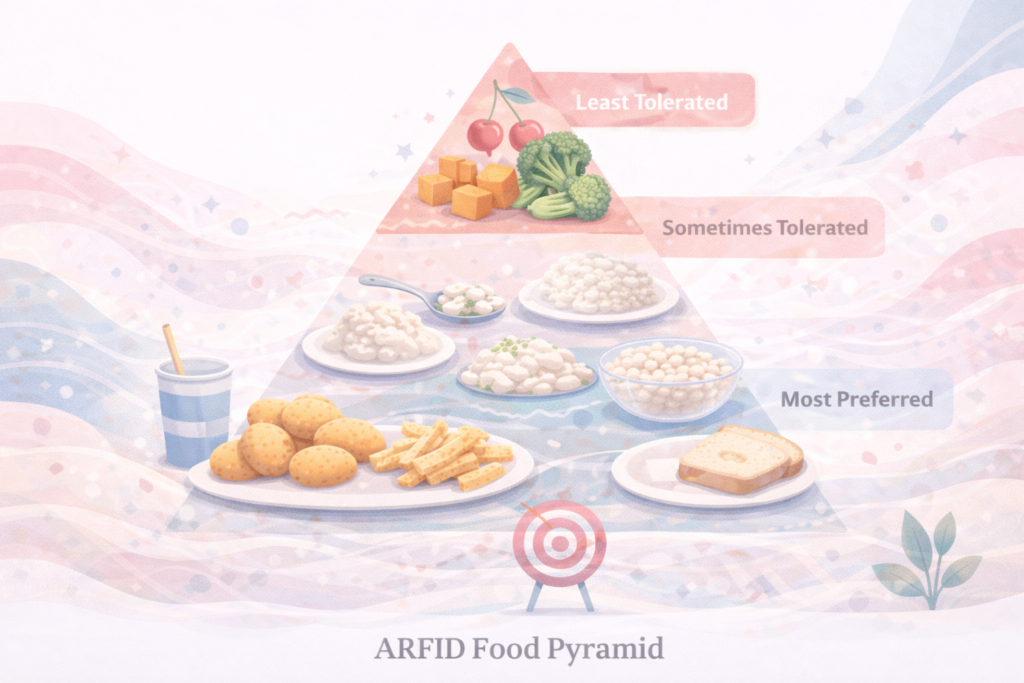
Feeding, ARFID‑style patterns & sensory eating
Food selectivity, safe foods, anxiety loops, and pressure‑free steps that protect trust.
At a glance
- Food selectivity can be sensory, anxiety‑based, GI‑driven, or a mix.
- Pressure backfires; trust is the intervention.
- ARFID is about impairment (nutrition, growth, distress), not “picky eating.”
If you only do one thing
- Separate “safe foods” (nutrition) from “learning foods” (exposure). Never remove safe foods as leverage.
Food selectivity has causes
For some children, food is a sensory problem (texture, smell, temperature). For others, it is an anxiety problem (fear of choking/vomiting). For many, it is also a gut comfort problem (reflux, constipation).
These drivers matter because the support path differs.
ARFID‑style patterns
ARFID is more than picky eating: it involves significant restriction with impact on nutrition, growth, or distress/functioning.
If you’re worried about weight loss, dehydration, or nutritional compromise, seek professional help.
Trust is the intervention
Pressure, bribing, and removing safe foods often backfire. A safer model is: keep safe foods available (nutrition), and treat new foods as skill practice (curiosity), never punishment.
Use tiny exposures: looking, smelling, touching, licking — without demanding bites.
Practical steps
Create predictable meal structure. Keep the table calm. Offer one “learning food” alongside safe foods. Track GI comfort and sleep — both can change eating.