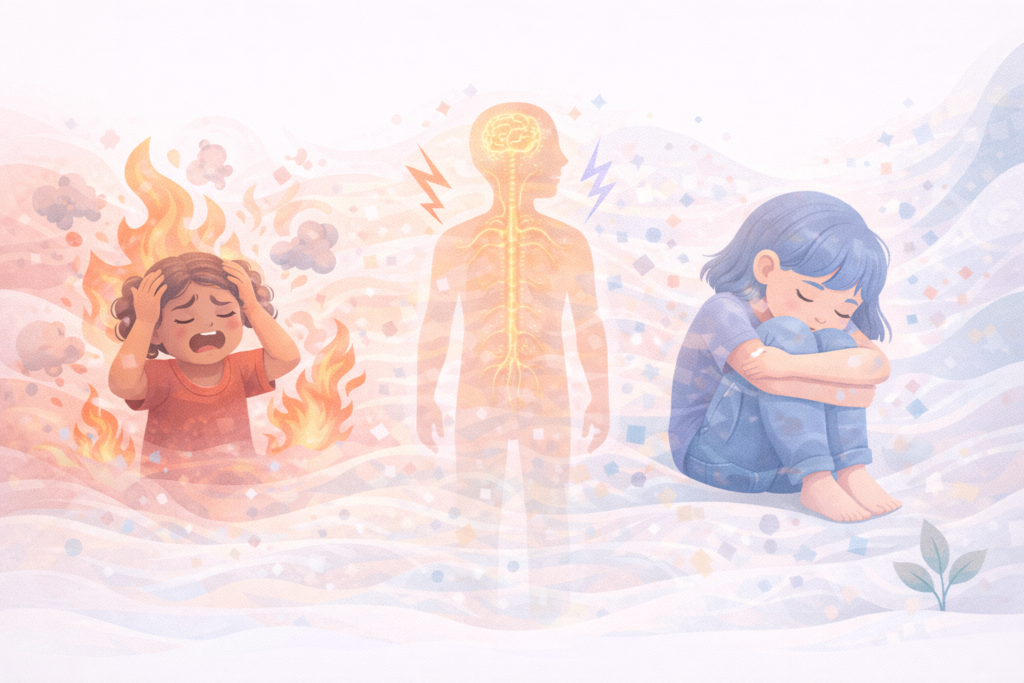
Regulation: stress, meltdowns, shutdowns & the nervous system
Why regulation is a skill, how stress stacks, and what “support” looks like in real life.
At a glance
- Meltdowns are not tantrums; shutdowns are not “refusal”. Both are stress responses.
- Co‑regulation comes before self‑regulation.
- Safety cues (tone, pace, predictability) matter more than words.
If you only do one thing
- In the moment: fewer words, reduce sensory input, remove demands, and stay close and calm.
Regulation is a nervous system skill
Regulation is the ability to shift arousal up or down and stay within a “window of tolerance.” Many neurodivergent kids have narrower windows or higher baseline arousal.
When the nervous system is in protection, learning shuts down. That is why co‑regulation comes first.
Meltdown vs tantrum vs shutdown
A tantrum is usually goal‑directed (seeking something) and can stop when the goal changes. A meltdown is loss of control under stress; a shutdown is collapse/withdrawal under stress.
Both meltdowns and shutdowns require support, not punishment.
In the moment: fewer words, more safety cues
Use calm tone, slower pace, and simple predictable phrases. Reduce sensory input. Remove demands. Stay nearby if the child prefers, or give space if proximity escalates.
After the storm, repair matters: “That was hard. We got through it. Next time we’ll try…”
Preventive scaffolds
Build predictable routines, embed micro‑breaks, and plan recovery time after high‑load events.
Treat sleep, pain, constipation, and hunger as regulation issues — because they are.