MELBOURNE / FAMILY EXPLORATION
Places for different ways of experiencing the world.
Some children seek movement, sound and stimulation. Others prefer slower experiences, familiar routines and space to retreat. Many need a little of both.
This independent guide explores six Melbourne destinations through a sensory-informed lens. Discover what children can actually do, how environments might feel and the practical details that make family outings easier.
Information reviewed 26 October 2026. Booking conditions and prices may change.
01 / CHOOSE BY NEED
Where might we feel most comfortable?
Rather than labelling every space as sensory-friendly, we’ve identified which environments may suit different preferences and support needs.
Movement and sensory seeking
We Rock the Spectrum Preston and Moorabbin offer swings, trampolines, climbing and movement-focused equipment, plus calming rooms.
Explore PrestonFlexible outdoor exploration
Royal Botanic Gardens Melbourne offers nature play, walking, shaded areas and opportunities to adjust your route and visit length.
Explore the gardensStructured learning and interests
Scienceworks and Melbourne Museum are useful for interests in science, dinosaurs, discovery and hands-on learning.
Explore ScienceworksReduced-stimulation sessions
Scienceworks, Melbourne Museum and Funtopia publish specific sensory-adjusted visiting opportunities. These require checking current arrangements.
Explore Funtopia02 / OUR ASSESSMENTS
Reading the sensory reports.
Each assessment considers noise, lighting, crowding, predictability, accessibility and safety.
Scores from 1 to 5 represent estimated typical sensory demand, not venue quality. Lower scores suggest less stimulation or variation. Higher scores suggest greater sensory intensity or unpredictability. They are reasoned planning estimates, not measured noise, light or crowd data.
Accessibility and safety are described through specific environmental features rather than reduced to numerical ratings.
A high-demand venue may be ideal for a sensory seeker. A low-demand environment is not automatically suitable for someone who needs movement and active input.
03 / EXPLORE THE PLACES
Six places. Six different experiences.
01 / SCIENCE AND DISCOVERY
Scienceworks
Spotswood, Melbourne

Scienceworks encourages children to investigate how the world works through practical, interactive exhibitions. Families can explore science concepts, technology, movement and space-related interests.
What children can experience
- Hands-on scientific experiments and interactive displays.
- Movement-based exhibits and activities requiring problem-solving.
- Special science exhibitions and scheduled demonstrations.
- Planetarium experiences, available separately with additional fees.
- Outdoor spaces for a change of environment.
Individual sensory report
| Dimension | Demand | What to expect |
|---|---|---|
| Noise | 4/5 | Electronic sounds, interacting visitors and demonstrations. |
| Lighting | 3/5 | Mixed gallery lighting, screens and effects. |
| Crowds | 4/5 | School groups, queues and busy interactive exhibits. |
| Predictability | 3/5 | Fixed galleries but changing shows and visitors. |
Accessibility and safety
Museums Victoria offers sensory maps, visual stories and free sensory bags containing earmuffs, fidget tools and communication cards. Accessible toilets and lifts are identified on visitor maps.
Some exhibits involve sudden noises, moving equipment or changes in light. The Planetarium and Lightning Theatre may be particularly intense for some visitors.
When to consider visiting
Published low-sensory sessions: First Saturday of each month from 3 pm to 4:30 pm, excluding school holidays. Gallery sound and lighting are reduced. Additional ticketed experiences are not necessarily adjusted.
Our editorial review
A strong choice for children motivated by science or repeated hands-on experimentation. The main challenge is the number of simultaneous stimuli. Choose two or three experiences rather than trying to cover the entire museum.
Download a visual story, identify quieter galleries, ask about sensory bags at reception and warn children before moving into loud or dark exhibition spaces. Plan a clear end point for the visit.
02 / EARLY CHILDHOOD DISCOVERY
Melbourne Museum Children’s Gallery
Carlton, Melbourne

The Pauline Gandel Children’s Gallery is designed specifically for babies and children aged five and under. Its reopened gallery includes dinosaur discovery, creative exploration, natural environments and a camouflage disco.
What children can experience
- Dinosaur fossil digging and imaginative discovery.
- Exploring the outdoor discovery garden and plant life.
- Interactive museum objects and tactile learning experiences.
- Dancing and visual play in the camouflage disco.
- Climbing and movement activities designed for young children.
Individual sensory report
| Dimension | Demand | What to expect |
|---|---|---|
| Noise | 4/5 | Children playing, interactive sounds and music. |
| Lighting | 4/5 | Colourful installations and changing indoor effects. |
| Crowds | 3/5 | Timed capacity but active shared areas. |
| Predictability | 2/5 | Clearly defined session length and bookable entry. |
Accessibility and safety
Melbourne Museum publishes sensory maps and visual stories and offers sensory bags. The museum has accessible toilets and mobility access.
The climbing net is restricted to children five and under and their carers. The disco environment may be challenging for children sensitive to moving visuals, music or rapidly changing sensory input.
When to consider visiting
Book your 50-minute Children’s Gallery session in advance. Melbourne Museum offers monthly low-sensory museum sessions on the first Saturday, generally 3 pm to 5 pm. Check whether your preferred Children’s Gallery session is available during that period.
Our editorial review
Particularly useful for preschoolers with interests in dinosaurs, nature or imaginative play. Timed admission gives families a predictable finish, although transitions can be difficult for children who become deeply engaged with a favourite activity.
Reserve both museum admission and the free gallery time slot. Explain the 50-minute limit beforehand. Consider a visual timer and give a transition warning before leaving a favourite activity.
03 / NATURE AND EXPLORATION
Royal Botanic Gardens Melbourne
Melbourne Gardens
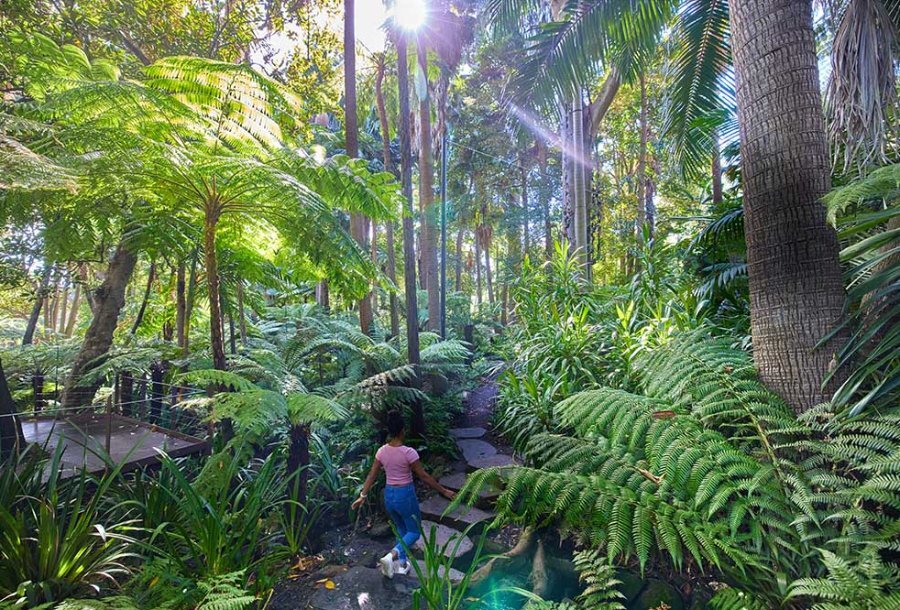
The gardens offer natural textures, open lawns, winding paths, scented plants and shaded areas. Families can choose between gentle walks and active exploration without following a fixed activity program.
What children can experience
- Explore plants, leaves, natural textures and wildlife.
- Follow the accessible Fern Gully boardwalk beneath tree ferns.
- Visit the Ian Potter Foundation Children’s Garden when open.
- Climb, crawl and explore nature-based play features.
- Observe water, insects and seasonal environmental changes.
Individual sensory report
| Dimension | Demand | What to expect |
|---|---|---|
| Noise | 2/5 | Birdsong, wind, visitors and nearby activity. |
| Lighting | 3/5 | Natural light with changing shade and glare. |
| Crowds | 2/5 | Open lawns, narrower pathways and busy attractions. |
| Predictability | 3/5 | Weather, insects and seasonal changes. |
Accessibility and safety
Many garden paths are accessible. Fern Gully’s boardwalk is accessible, and the gardens publish an All Abilities Access Key identifying gradients, toilets, parking and visitor services.
Supervision is important around water, uneven terrain and open boundaries. The gardens are not a fully enclosed playground.
When to consider visiting
Fern Gully provides a naturally shaded environment. The Children’s Garden normally opens Wednesday to Sunday, with additional school holiday opening, and closes for part of winter. Always confirm seasonal arrangements.
Our editorial review
A useful choice for families who need flexibility. The gardens allow families to leave an activity, shorten a walk or take a break without needing to complete a scheduled program.
Choose one small area rather than planning the whole gardens. Download the Access Key, identify toilets, consider sun protection and bring a familiar snack. For children sensitive to smells, consider the strong natural fragrances around planted garden areas.
04 / ACTIVE SENSORY PLAY
We Rock the Spectrum Preston
Preston, Melbourne
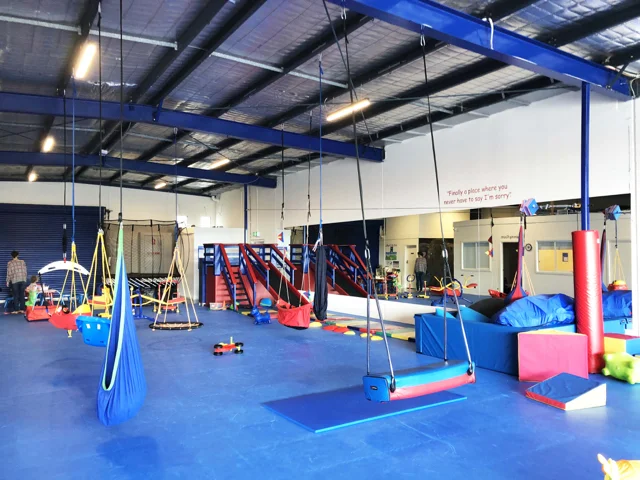
Preston’s sensory gym was designed for children of different abilities to explore movement, balance, climbing and sensory play in an inclusive setting.
What children can experience
- Suspended swings for vestibular movement.
- Trampolines, climbing frames and a zip line.
- Crash mats and activities involving body awareness.
- Arts, crafts and fine motor play.
- A separate calming room for breaks.
- Toddler activities and age-appropriate play resources.
Individual sensory report
| Dimension | Demand | What to expect |
|---|---|---|
| Noise | 4/5 | Active equipment, voices and excited play. |
| Lighting | 3/5 | Indoor overhead lighting. |
| Crowds | 3/5 | Booked sessions with numbers that vary. |
| Predictability | 2/5 | Familiar equipment, session structure and social story. |
Accessibility and safety
The facility advertises sensory equipment, a calming room and inclusive programs. Check wheelchair access and individual transfer needs directly with staff.
Children need adult supervision around moving equipment. Swings and zip-line activities may involve unexpected proximity to other children.
When to consider visiting
All open-play sessions require booking. The gym limits attendance and may close for private events. Ask about expected numbers before booking if crowding is a significant concern.
Our editorial review
One of the more purposefully inclusive options in this guide. The combination of active movement equipment and a calming room is particularly useful for children whose needs vary during the same visit.
Use the venue’s published social story. Explain the session length, choose a first activity together and locate the calming room on arrival. Ask about NDIS-related services separately, since open-play funding depends on the participant’s plan and the applicable service rules.
05 / MOVEMENT AND CALMING SPACES
We Rock the Spectrum Moorabbin
Moorabbin, Melbourne

Moorabbin offers equipment designed for active movement and sensory exploration alongside a calming room. Families can choose between high-energy activities and more contained play experiences.
What children can experience
- Trampolines and zip-line movement.
- Suspended swings and other sensory equipment.
- Creative activities and an arts and crafts area.
- Play resources for younger children.
- A designated calming room.
- Bookable play and specialised programs.
Individual sensory report
| Dimension | Demand | What to expect |
|---|---|---|
| Noise | 4/5 | Group movement, play sounds and equipment. |
| Lighting | 3/5 | Indoor lighting, with a separate calming space. |
| Crowds | 3/5 | Varies with group sessions and bookings. |
| Predictability | 2/5 | Advance booking and structured session periods. |
Accessibility and safety
The venue offers inclusive equipment and advertises support programs. Families with specific mobility or communication needs should confirm arrangements before booking.
Swings, trampolines and zip lines require adult supervision. Capacity limits apply to some sessions, but this does not guarantee low noise.
When to consider visiting
Weekday entry before 3:30 pm is offered at a different price from peak sessions. This is a pricing distinction, not proof that these sessions are quieter. Ask staff about expected attendance and other bookings.
Our editorial review
A good candidate for children who seek substantial physical input but benefit from having a quieter room available. Advance booking may help families prepare expectations.
Complete required booking forms and check the operator’s current timetable. Online bookings may close 24 hours before a session, so contact the gym for last-minute availability. Discuss support needs before the visit.
06 / INDOOR ADVENTURE
Funtopia Carrum Downs
Carrum Downs, Melbourne

Funtopia offers a large indoor playground, climbing activities, dedicated toddler play and food facilities. Its regular environment is active and stimulating, but the operator also advertises sessions with reduced sensory input.
What children can experience
- Multi-level indoor playgrounds and climbing equipment.
- Rock climbing for children meeting age requirements.
- Enclosed toddler play areas.
- Soft play, slides and imaginative exploration.
- An on-site cafe and dining facilities.
- Advertised sensory-adjusted play sessions.
Individual sensory report
| Dimension | Demand | What to expect |
|---|---|---|
| Noise | 5/5 | Large play areas, excited visitors and activity sounds. |
| Lighting | 4/5 | Bright indoor attractions and visually busy areas. |
| Crowds | 4/5 | Shared equipment, queues and scheduled groups. |
| Predictability | 3/5 | Booked activities with variable play conditions. |
Accessibility and safety
Toddler areas and structured climbing activities provide different activity levels. Check individual climbing, mobility and harness requirements.
Height, enclosed climbing spaces, proximity to other children and busy transitions may be challenging. Playground participants need suitable grip socks.
When to consider visiting
Published sensory sessions: First Wednesday of each month during school terms, 3 pm to 6 pm, excluding public holidays. Lights are dimmed and music is switched off. Check that the session is running at Carrum Downs before booking.
Our editorial review
Funtopia is better suited to children seeking strong movement and climbing experiences during ordinary sessions. Its adjusted sessions may provide a more manageable alternative for families who prefer reduced music and lighting.
Complete any required waiver before arriving, check session eligibility and bring grip socks. Discuss climbing and height-related needs before booking. For selective eaters, review available food options and the venue’s outside-food policy.
04 / EXPERIENCES AND PERSPECTIVES
The experience behind the information.
The reviews above are independent editorial assessments based on published venue information and environmental considerations. They are not presented as personal visits or testimonials.
First-hand experiences can add valuable context. Details such as changes in sound, crowd levels, staff accommodations and unexpected transitions help families make more informed decisions.
Have you visited one of these places?
Share when you attended, what the environment felt like, which accommodations were helpful and what you would recommend another family prepare for.
Share your experience05 / RESEARCH AND TRANSPARENCY
How we evaluate these places.
Official information
Venue websites establish published services, bookings, facilities, admission conditions and advertised accessibility arrangements.
Sensory assessment
We use activity types, environmental design and documented features to estimate typical sensory demands. These estimates are not instrument readings.
Editorial recommendations
Recommendations consider different sensory preferences and practical needs. No location is suitable for every family.
Community contribution
Dated first-hand reports may complement venue information after editorial moderation. Personal experiences remain distinct from facts.
Research checked 26 October 2026. Photographs show publicly documented venue environments, some from earlier years. Appearance and conditions may have changed. Photography remains credited to its respective source. Permission to republish photographs should be confirmed with the rights holders before public use.
06 / FAMILY QUESTIONS
Before your next outing.
Does a lower sensory score mean a better venue?
No. Scores estimate environmental demand, not quality. A higher-scoring play centre may be preferable for children seeking intensive movement.
Which places provide quieter sessions?
Scienceworks, Melbourne Museum and Funtopia publish sensory-adjusted sessions. Availability and adjustments differ, so check their official programs before booking.
What should we do if a child becomes overwhelmed?
Reduce demands, offer their preferred communication method, move to an agreed break area when possible and allow the visit to change or end.
Are all these venues wheelchair accessible?
No single accessibility rating covers every activity. Check entrances, pathways, equipment access, toilets, transfer requirements and individual supports with each operator.
Can these activities be paid for with NDIS funding?
Some providers advertise NDIS-related services, but ordinary recreation tickets are not automatically funded. Eligibility depends on the individual plan, the support being delivered and current NDIS rules.
FURTHER READING / VISIT PLANNING
A little more preparation.
Useful resources to make your next outing more predictable. Explore official sensory information, visual guides, accessibility details and practical booking arrangements for the places featured above.
SCIENCEWORKS / SPOTSWOOD
Low Sensory Sessions
Find reduced-light and reduced-sound sessions, information about sensory bags, sensory maps and visual stories that can help prepare children before visiting.
Helpful for: Planning around noise, lighting and unfamiliar museum experiences.
MELBOURNE MUSEUM / CARLTON
Visual Stories and Sensory Map
Download visual preparation guides and a sensory map identifying areas with different levels of stimulation. Useful for planning your route, transitions and possible break locations.
Helpful for: Children who benefit from seeing the environment before experiencing it.
ROYAL BOTANIC GARDENS / MELBOURNE
Accessibility and Access Key
Find accessible routes, toilet locations, parking information, path gradients and downloadable Access Key resources to help plan a manageable visit.
Helpful for: Planning a shorter route with predictable facilities and suitable rest stops.
WE ROCK THE SPECTRUM / PRESTON
Open Play and Social Story
Explore two-hour play sessions, equipment, pricing and the venue’s social story. Learn about the calming room and what children may experience on arrival.
Helpful for: Preparing for movement-based play, new surroundings and transitions.
WE ROCK THE SPECTRUM / MOORABBIN
Bookings and Sensory Play
Review current open-play arrangements, admission options, sensory equipment, calming-room facilities and available booking periods.
Helpful for: Choosing a suitable session and asking about expected attendance.
FUNTOPIA / CARRUM DOWNS
Sensory Sessions and Bookings
Find sessions with reduced lighting and music switched off, including current age requirements, admission details and booking instructions.
Helpful for: Families seeking a more controlled indoor climbing and playground experience.
PRACTICAL DETAILS
Worth checking before you leave.
Accessibility and sensory supports
Melbourne Museum publishes details about mobility access, sensory bags, accessible toilets, parking and assistance arrangements.
Museum accessibility informationFood, clothing and session rules
Funtopia publishes information about socks, footwear, dietary requirements, outside food, bookings and family facilities.
Funtopia visitor FAQsNature play and opening days
The Ian Potter Foundation Children’s Garden has seasonal access rules, including winter closure periods and different school holiday arrangements.
Children’s Garden visiting information