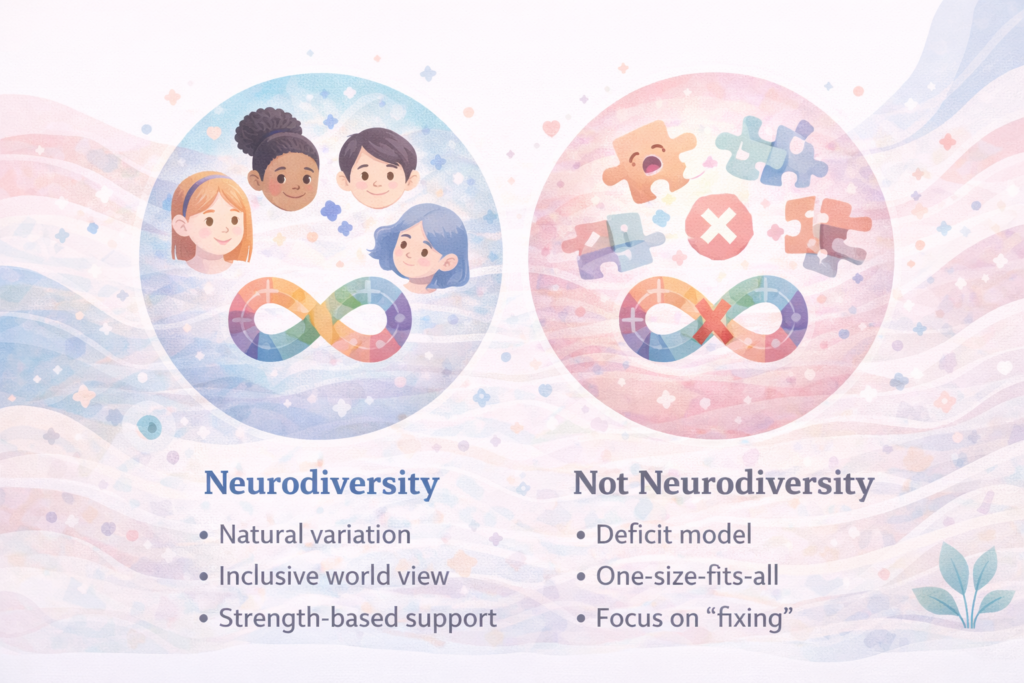
Foundations: what neurodiversity is (and isn’t)
Core concepts, language, development, and how to read research without getting lost.
At a glance
- Neurodiversity describes natural variation in human brains and nervous systems — it is not a diagnosis by itself.
- Diagnoses are tools for support. Traits exist on continua and often cluster together.
- Look for function: what is hard right now (sleep, transitions, sensory load, social demands) and what reduces stress.
If you only do one thing
- Reduce demand during dysregulation; add predictability; narrate safety (“You’re safe. I’m here.”) and offer tiny choices.
What “neurodiversity” means
Neurodiversity is a concept: it recognises that human brains and nervous systems vary, and that variation shapes attention, sensory processing, communication, movement, learning, and regulation.
It is not the same thing as a diagnosis. Diagnoses (like autism, ADHD, dyslexia, DCD/dyspraxia, tic disorders) are clinical tools that can unlock support. Neurodiversity is the bigger umbrella that helps us talk about differences without reducing people to deficits.
A practical model: load, skills, and fit
When families feel stuck, it is usually because “load” exceeds “available skills.” Load includes sensory input, transitions, uncertainty, social demand, sleep debt, illness, pain, and executive burden. The same child may cope well in one environment and melt down in another because the fit changed.
A good support plan reduces load first (environment, routines, accommodations), then teaches skills in tiny pieces (with practice when calm), and finally improves fit (school adjustments, communication supports, sensory tools).
Co‑occurrence is normal, not the exception
Neurodevelopmental profiles often overlap. A child can be autistic and have ADHD traits, or have dyslexia and anxiety, or have DCD with sensory sensitivities. Overlap does not mean “worse”; it means supports need to be more tailored.
A useful question is: which system is shouting today? Is it sleep, sensory overload, stomach discomfort, social exhaustion, or an executive‑function bottleneck?
Reading research without drowning
Look for the type of study (systematic review, meta‑analysis, randomised trial, cohort study). Prefer summaries (systematic reviews) over single small studies when possible.
Treat big claims with caution, especially when they promise a universal fix. The most trustworthy sources describe limitations and individual differences.
If a result sounds dramatic, check whether it was replicated and whether it applies to your child’s age and context.
When to seek medical help
Some “behaviour” changes are medical: acute regression, new staring spells, breathing changes, dehydration, severe constipation, persistent vomiting, sudden sleep collapse, or new loss of motor skills deserve medical review.
This hub is educational. If you are concerned, seek professional support.