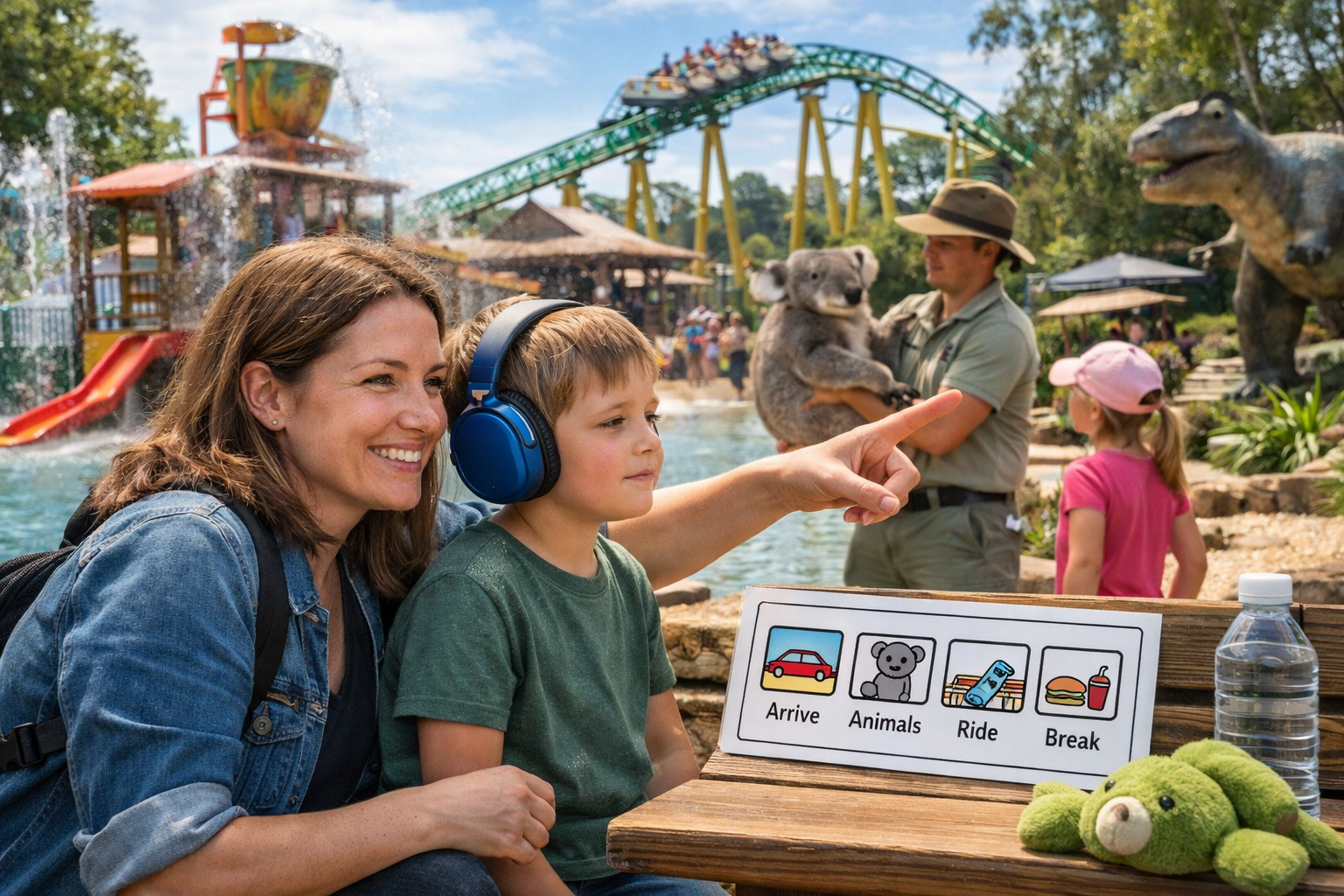
How to Navigate Theme Parks Such as Gumbuya World with Neurodivergent Children
This guide is written from my perspective as a Melbourne based autism mum who regularly plans outings across Victoria with neurodivergent kids. It brings together lived experience and gentle, practical strategies for families visiting theme parks such as Gumbuya World.
Visiting a theme park can feel big for any family. For parents raising neurodivergent children in Melbourne and across Victoria, planning a day at a park such as Gumbuya World can bring a mix of excitement and worry. Sensory overload, crowds, queues and unfamiliar spaces all play a part. With gentle preparation and realistic expectations, these outings can become beautiful core memories instead of stressful days you want to forget.
Gumbuya World is one of Victoria’s much loved family destinations, located in Tynong, roughly an hour from central Melbourne. It brings together rides, water attractions, animal encounters and open play areas. For many neurodiverse families it represents both possibility and challenge. The hopeful truth is that with the right planning and a child led pace, it can be a very positive experience for kids who experience the world differently.
Plan your visit with quiet times in mind
Crowds and noise are often the biggest triggers for sensory overload. Gumbuya World is usually quieter on weekday mornings during school terms compared to weekends and school holidays. If you can, plan your visit for an off peak day and aim to arrive as the gates open. This gives your child time to settle in before the park becomes busier and louder.
Before you go, look at the Gumbuya World map online and identify:
- Calmer areas with more open space
- Shaded spots that can work as a base camp
- Quieter attractions you can start with before trying bigger rides
This type of gentle planning helps you move through the park with more confidence and less decision fatigue.
Know your child’s sensory needs
Every neurodivergent child has a unique sensory profile. Some kids may love the feeling of water play and find it soothing, especially in the Oasis Springs water park area on hot Melbourne days. Others may find the noise, splashing and crowds extremely overwhelming.
Before your visit, take time to map out your child’s likely sensory needs:
- Are they sensitive to loud sudden sounds or background noise
- Do they prefer movement based activities or calmer predictable ones
- How do they usually cope with queues and waiting
- Do they struggle with heat, bright light or certain clothing textures
Pack your own sensory toolkit. This might include noise cancelling headphones, a favourite comfort toy, chewy jewellery, a small weighted lap pad or a familiar hoodie that helps your child feel safe. Extra changes of clothing, especially for water play, can also prevent distress if something feels uncomfortable.
Build a gentle and flexible itinerary
Instead of trying to cram the entire park into one visit, think of your day as a soft rhythm. You are not trying to tick every box. You are trying to create a few good moments and stop before everyone is exhausted.
A simple flow might look like:
- Arrive early and settle into a calm base area with shade
- Start with low stimulation experiences such as animal encounters or a gentle ride
- Offer a snack and water break before moving to another area
- Try one or two higher energy rides if your child is curious and willing
- Return to a quiet zone for decompression
Allow yourself to change the plan in real time. Neurodivergent friendly days at Gumbuya World will look different for every family and every child.
Take regular sensory breaks
Melbourne and wider Victoria can be very hot in summer and that heat adds extra load to the nervous system. Take breaks before your child becomes overwhelmed rather than waiting for a meltdown.
Look for:
- Shaded picnic tables away from speakers and high traffic areas
- Grassy spots where your child can lie down, rock, flap or stim freely
- Quieter paths where you can walk slowly and reset together
During these breaks, encourage slow sips of water, deep gentle breaths and time with favourite comfort items. Short consistent pauses often prevent bigger crashes later in the day.
Communicate with Gumbuya World staff
Many Victorian attractions, including Gumbuya World, are becoming more aware of autism and neurodiversity. Do not be afraid to speak to staff and let them know your child is neurodivergent and may need a little extra time, space or flexibility.
You can ask:
- Which rides are more predictable and less intense
- Where the quieter entry points or viewing areas are
- If there are any informal supports for families with sensory needs
Most staff genuinely want families to have a good experience and will try to help when they understand what you need.
Use visual supports and social stories
Many neurodivergent kids feel safer when they know what is coming next. Simple visual supports can transform the way they experience a theme park.
Before your Gumbuya World visit, you can:
- Show photos from the park website and talk through what might happen
- Create a short social story about arriving, lining up, going on one ride and taking a break
- Print or screenshot a simple visual schedule of two or three planned activities
You do not need anything fancy. Stick figures and simple words are often enough to give your child a sense of control and predictability.
Stay attuned to triggers and signals
Neurodivergent kids often communicate rising stress through behaviour before they can find words. At Gumbuya World or any theme park in Victoria, watch for subtle signs such as:
- Covering ears or eyes more often
- Increased stimming, pacing or clinginess
- Sudden silence or withdrawal from activities
- Demanding to leave with urgency
These signals are not misbehaviour. They are communication. If you see them, gently change your plan. Move to a quieter space, offer a break or consider ending the day early while things are still manageable.
Use seating and quiet zones often
Throughout Gumbuya World there are seating areas, shaded shelters and quieter corners that sit slightly away from the busiest rides. When you arrive, take a few minutes to notice where these calmer zones are so you can return to them easily when needed.
For example, you might choose a shaded base near a grassed area or a quieter patch near the wildlife zone rather than right next to a loud ride. Use these spaces often and frame them as cosy rest stops instead of time outs.
End the day with comfort and reflection
Once you leave Gumbuya World and make your way back home to Melbourne or another part of Victoria, keep the rest of the day gentle. Familiar routines, favourite foods and calming activities help your child transition back from a big sensory experience.
Later, when things feel calm, you can talk together about:
- What they liked the most
- What felt too hard or too loud
- What they might want to try next time
Celebrating the small wins builds confidence for future outings. Even if you only tried one ride or spent most of the time watching animals, that still counts as a success. You showed up, you listened to your child and you did your best with the day you had.
Final thoughts for Melbourne and Victoria families
Theme parks such as Gumbuya World can feel intimidating when you are parenting neurodivergent kids. With preparation, flexibility and a strong focus on your child’s sensory needs, they can also become places of joy, curiosity and pride.
If you are an autism mum or carer in Melbourne, the Mornington Peninsula, Gippsland or anywhere across Victoria, you are not alone in figuring this out. Many of us are quietly learning how to make big days out more accessible and more gentle for our kids.
If you would like a printable sensory planning checklist for theme parks, or a custom social story for your child before a Gumbuya World visit, reach out and I can create a soft, child friendly version for your family.
How to navigate Gumbuya World with neurodivergent kids
- Choose an off peak day that suits your child
- Arrive early so the park is calmer at the start
- Begin with low stimulation activities and animal areas
- Take sensory breaks often in shaded quiet spots
- Use visual supports and simple social stories
- Communicate your child’s needs to staff when needed
- End the day gently with familiar routines at home
Frequently asked questions
When is the best time to visit Gumbuya World with neurodivergent kids
Weekday mornings during school terms are usually quieter and lower sensory than weekends and school holidays. Early arrivals are best for settling in before crowds increase.
What should I pack for a sensory friendly theme park visit
Helpful items include noise cancelling headphones, a comfort toy, chewy jewellery, a simple visual schedule, snacks, water, sunscreen, sunglasses, clothing layers and any sensory tools your child already uses at home.
Does Gumbuya World support accessibility needs
Staff can offer guidance about ride intensity, quieter areas and entry support. Families are encouraged to communicate their child’s needs so staff can assist where possible.
How far is Gumbuya World from Melbourne
Gumbuya World is located in Tynong, approximately one hour from central Melbourne by car. Travel times vary based on traffic and your starting location.
What activities suit neurodivergent kids at Gumbuya World
Low stimulation options can include animal encounters, gentle rides, shaded picnic areas and open spaces for quiet play. Water play may be calming for some children and overwhelming for others, so follow your child’s cues.

Jasmine
Founder of Mums The Word Melbourne and autism mum in Victoria
I write these pieces as a mum who has sat in the car park before big days out and wondered if it is worth trying. Every guide here is my way of standing beside you in those moments and making the path feel just a little softer.